
A locked iron safe, sealed for a hundred years. Which objects did Americans choose to tell their story?
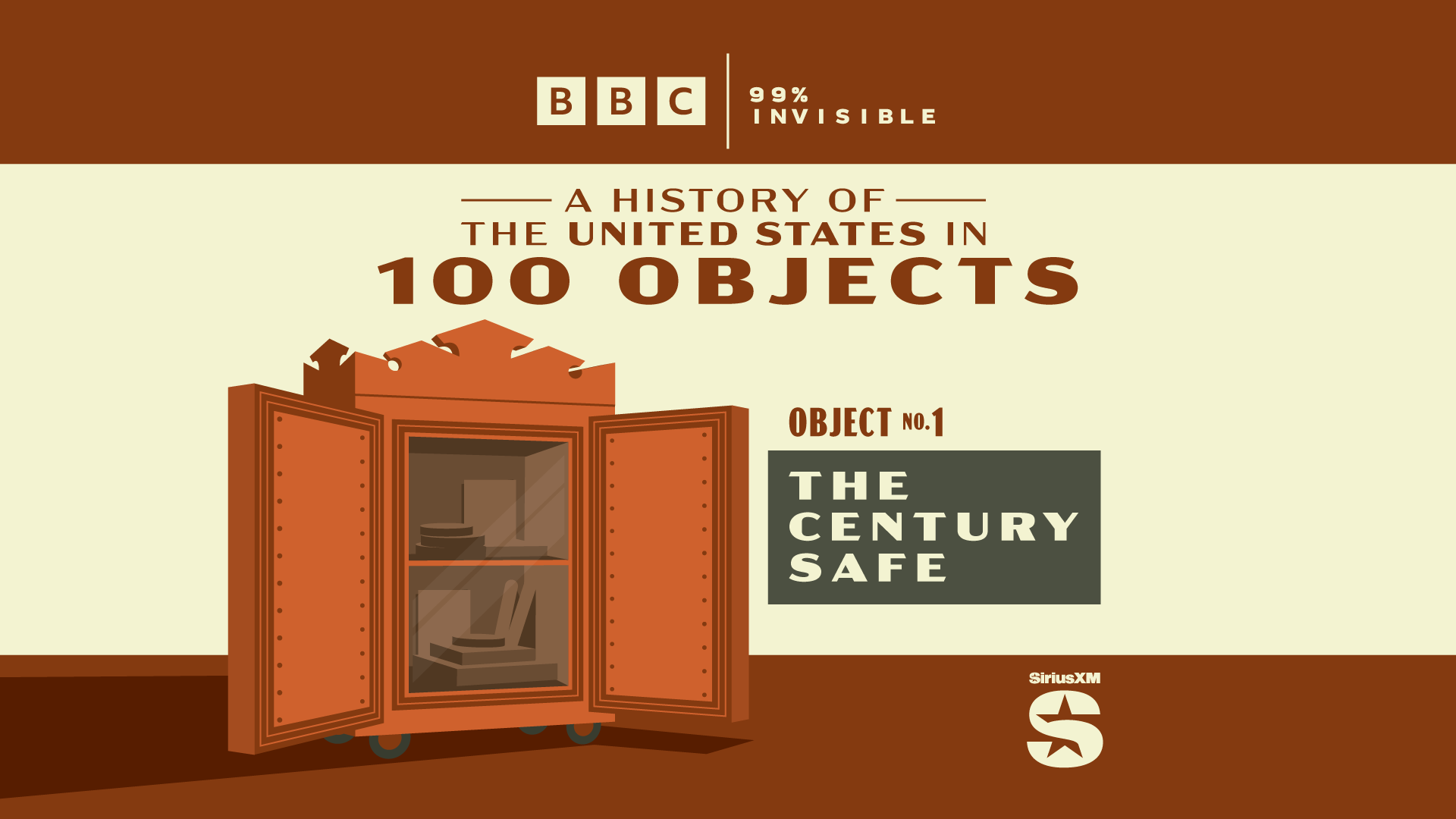
“The Century Safe” was designed as a time capsule. In 1876, as America celebrated its 100th birthday, a group of citizens filled the safe with objects they trusted to tell the country’s story — to be opened at the next great anniversary, in 1976. Now, on the eve of America’s 250th birthday, we’re looking back at how the nation has marked these milestones, and what those celebrations actually reveal. In the first episode of this new series, Roman Mars and historian Jill Lepore trace the Century Safe’s long wait, from the end of the Reconstruction era right up to Watergate, culminating in a highly anticipated opening in 1976. What spilled out was unexpected, even unsettling. Today, the Century Safe and its contents pose a larger question: what do the objects we choose to remember, or forget, reveal about how we author our own history?
A History of the United States in 100 Objects tells the story of America, one thing at a time. Hosted by Roman Mars and produced by BBC Studios and 99% Invisible, each week, an object opens the door into an extraordinary, often shocking story – about who we’ve been, what we’ve built, and what we’ve allowed ourselves to forget. This series forms a kaleidoscope through which American history refracts, revealing a country stranger and more fascinating than any single telling could capture.

Comments (6)
Share
I enjoyed the episode on the Century Safe – anything with Jill Lepore is guaranteed to be great. I also appreciated Roman’s reflections on some of the objects – but it left me wondering why someone at the Smithsonian didn’t go through the objects ahead of time and prepare some thoughtful remarks for the President to deliver, instead of just letting him make a fool of himself. I get the element of surprise and all, but seriously…
Anyway, my nomination for something to include in this series would be an artefact from Ellis Island. My grandparents, Domenico and Philomena (Pace) Santasiero (original spelling Santarsiero) came through there in 1920. Our country has always had a checkered relationship with mass immigration, and we are definitely seeing that play out now.
Please consider including any version of a church or family cookbook as an object – what a treasury of how we eat in any geography. From our shifts in ingredients (scratch to ready-made)to what is cherished (the greasiest page), the local cookbook means a lot to many.
Roman Mars asked for objects to be submitted for the 100 objectives. I’d like to submit a brass key, made in 1909 and given to an ancestor as a Key to the City of Denver. My mother used it as a paper weight.
Great episode.
The contributors to the century safe wanted us to remember their names, but what we want to know about is their lives.
Like old family photos, it is the forgotten but relatable events which make for the best memories.
An old photo of my great-grandfather’s home in 1890 is memorable not for the image of the house itself but for the half-seen maid at the window, conjuring up the unknowable lives within.
Doesn’t seem like state officials have thought much about what people would like to see when opening a time capsule for the 500th US anniversary. Much of what was chosen is coins and letters from high-ranking state leaders.
https://apnews.com/article/america-250-time-capsule-8d869f8aa39ef61a5721c039c397464e
Very disappointed in the current list of submitted items for the 250 time capsule. It seems like it’s all about the contributors and not about us as a nation of individual states. Lots of letters from the governors and coins, but no true artifacts to give those in the future a window into how people in 2026 lived.