
The walk to the border begins at a parking lot at the end of the road. The site isn’t much to speak of, just a sprawling expanse of asphalt peppered with cars. Over a million people travel here every year to embark on a kind of pilgrimage, crossing from Arizona into Mexico. Here, everyone is headed to the same small town in Mexico, called Los Algodones. It’s a town where, for decades, Americans and Canadians have roamed the streets, coming here in desperate search of something that’s impossible to find where they live: affordable dental care.
Every day, thousands of people from the US and Canada come to Los Algodones, where dental care costs up to 80% less than what it might cost in the US. In fact, dental tourism to Los Algodones is so common that many call this place ‘Molar City.’ Today there are nearly a thousand dentists in this 7,000 person town.
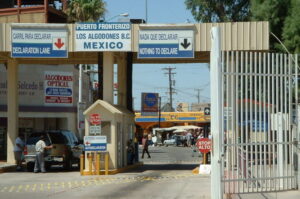
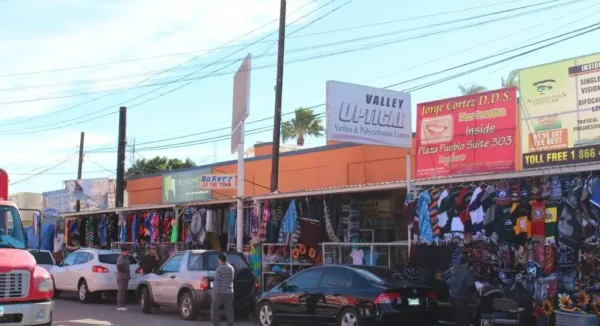
In Los Algodones, there are dense clusters of medical offices. Vendors are set up on sidewalks, where they sell handmade goods and kitschy souvenirs, like this one graphic tee that says “Keep calm, you’re on the fun side of Trump’s wall.” Then there are the street promoters – people who are stationed at almost every street corner. These promoters, who compete for commissions, vie for the attention of incoming visitors, directing them to specific clinics, pharmacies, or optical shops. In Molar City, a street promoter is the first person a tourist will encounter.
Los Algodones has built itself up to serve the dental needs of Americans and Canadians. And the town has become wildly successful in this goal. But Algodones went through many reinventions before it became Molar City.
Los Algodones means cotton, in plural. And that’s because commercial cotton farming is what this land was once known for, back when it was still vibrant and green. By the 1960’s, a series of policy changes had depleted the soil and dammed the flow of the Colorado River into Mexico, which meant the riverbeds were drying up and crops were struggling. But many Mexican border towns have long had another thriving business: booze. And after the farming industry crumbled, that’s what Los Algodones relied on. At one point, the town had 48 bars. American soldiers living on military bases in Yuma, Arizona were regulars.
The transformation into Molar City began in the 1960s with Dr. Bernardo Magaña, a dentist who recognized the potential of the American market. Magaña established the first clinic and eventually encouraged other dentists to move to the area to meet the overwhelming demand. As the town’s reputation grew, Magaña, serving as a municipal leader, began shifting the local economy away from bars and towards dental care.
Over the years, Magaña would treat patients who would talk about their struggles with healthcare in America. For most Americans, dental care has always been out of reach. Early dentistry was considered more of a craftsman’s trade. Dental work was performed by barbers and blacksmiths; people who were considered quacks by the larger medical field. And ever since then, dentistry and general medicine have fought hard to keep themselves separate. Cut to today, and dental and health care are still separated. They have separate insurances, separate teaching schools, separate medical records even. It’s as if matters of the mouth are separate from the body, but of course, they’re not.
Mexican dental work is less expensive for a couple reasons. Labor and real estate in Mexico costs a lot less than in the US. And dental school is heavily subsidized, meaning fewer dentists graduate school with the kind of colossal debt that’s rampant in the US. And in Mexico, dentists don’t need to get malpractice insurance. Still – it’s not as though Mexican dentistry is affordable to all Mexicans. Only 48% of Mexicans nationwide who are in need of oral health care are able to receive it.
Still, to the average American, it’s a discount worth traveling for. And this trend might increase. By 2060, the number of Americans over 65 will practically double. And the US will see an exploding need for all kinds of healthcare services in a system that won’t be able to support all of its people.
Today, Los Algodones is a streamlined machine designed to make American visitors feel safe and comfortable. The local economy relies entirely on this cross-border flow. Clinics often employ strategies to mimic American standards, from interior design to sterilization practices, and staff are sometimes encouraged to minimize their Mexican accents. The local police force prioritizes the protection of the dental industry, ensuring that tourists feel secure despite the region’s broader issues with cartel violence.
But the town’s reliance on American money creates a complex dynamic for the locals. While tourists cross the border with ease, many of the workers who serve them cannot. A significant number of the street promoters are deportees who grew up in the United States. Their fluency in American English makes them effective at comforting nervous patients, yet they work within sight of a home they can no longer return to.


Comments (3)
Share
Beautiful and empathetically presented story with so many layers of relevance and points of view. I’m sure it was a strong team effort but Lashae Madan seemed immersed
in this story about social architecture. As 99% Invisible keeps expanding beyond the physical environment it is more engrossing than ever. Congratulations.
Insightful, educational without preaching & empathetic. One of your best, 99pi team. More from Lasha please!
For similar reasons, people in parts of Europe with less access to affordable major dentistry procedures (restorative and cosmetic) have been travelling East to countries like Bulgaria and Turkey.