
Caroline Fraser grew up on the beautiful Mercer Island in Washington State. But despite the seemingly peaceful landscape, her memories of the area were long haunted by an inexplicable amount of death. In the 1970s, when Caroline was a teenager, the infamous serial killer Ted Bundy committed his first confirmed murders, not far from where Caroline lived.
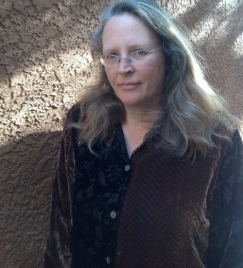 Over the following years, Caroline would learn of more deaths by murder, suicide, and car accidents while driving on the poorly designed Mercer Island Bridge. For years, Caroline yearned for some sort of explanation.
Then one day, Caroline discovered a map which documented the amount of arsenic in the soil in the Tacoma region. The map was the first of many clues she used to try to make sense of what plagued the Pacific Northwest of her childhood. What Caroline found was this: the 70s and 80s were the heyday of the mining and smelting of heavy metals in America—metals like copper, lead, and zinc, which all released huge amounts of toxic fumes like lead, arsenic, and asbestos into the air. The same time period saw another awful trend: a massive spike in serial killing.
These are two seemingly unrelated histories. But Caroline set out on a quest to see if there was some kind of connection here, between environmental pollution and serial killing.
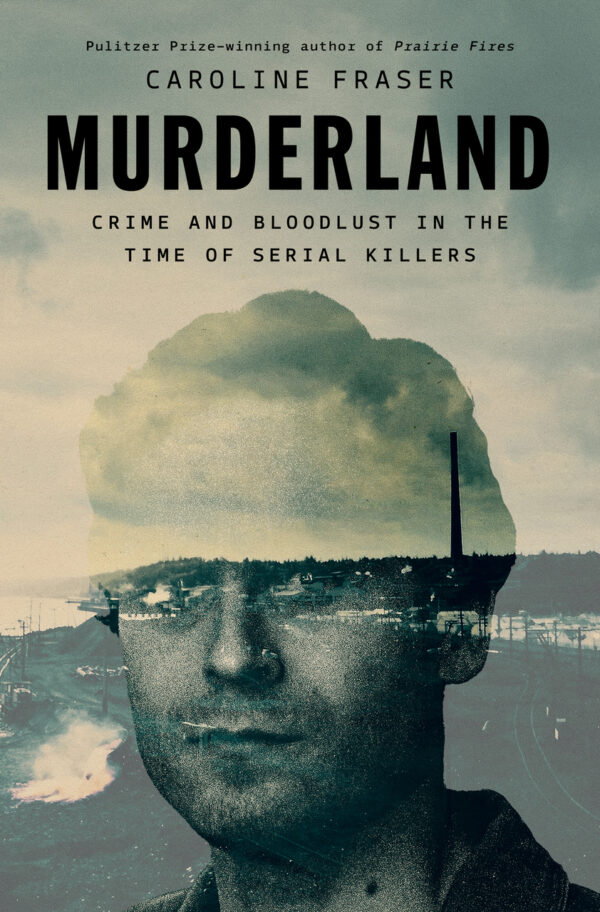
In her new book, Murderland: Crime and Bloodlust in the Time of Serial Killers, Caroline argues that the wave of serial killing of the 70s and 80s might be related to the smelting industry’s environmental pollution, an idea that builds on the existing theory connecting lead toxicity and crime. Caroline makes the case that all those toxic fumes in the Pacific Northwest possibly fueled a generation of serial killers.
Caroline has written about a wide variety of subjects. Her first book, God’s Perfect Child, was a biography about the woman who founded the Christian Science Church. And her Pulitzer-prize winning book, Prairie Fires, was about Laura Ingalls Wilder, the author who wrote the children’s book series Little House on the Prairie. One thing that all these books, including Murderland, have in common is that they’re all actually about the environment.
Murderland is a book with a rotating cast of villains. There’s ASARCO, the company that’s operated giant smokestacks across the country since the late 1800s. There’s the deadly Mercer Island Floating Bridge and the engineers behind it. And then, of course, there are the serial killers of the Pacific Northwest. The book is a blend of true crime, memoir, and environmental history, and it’s available right now in bookstores near you.



Comments (4)
Share
Small correction, jet aircraft have never used leaded gas, but avgas used on piston engine aircraft still has lead because most small piston engines used on light aircraft are based on designs dating back to the first half of the 20th century. This is because the market is so small and compliance with aviation regulations so costly that very few new light aircraft IC engines have been developed.
Even though my beloved home neighborhood of West Seattle gets a passing mention, the recurring “Mercer Island Floating Bridge” references are driving me nuts. There is no bridge called that, of the 3 floating bridges connecting that godforsaken NIMBY island.
Hello 99pi team,
Your podcast is one of my favourites, combining design, engineering, politics and culture in a palatable mix.
However, in the episode Murderland you talk about a book which seems to draw conclusions, some of which do not withstand scientific scrutiny, notably these two points:
1. “Proximity to sea-tac causes increased exposure to lead from aviation fuel.” Considering that most aircraft have jet engines, and jet fuel does not need lead*, this is a statement on very shaky ground. It would have warranted some more scrutiny from your side.
(* tetraethyl lead being added to fuel as an antiknock agent to increase efficiency of internal combustion engines – jet engines do not need the additive – furthermore: lead in aviation fuel for internal combustion engine aircraft has not been phased out, only reduced)
2. “Reduction of lead pollution after the leaded-fuel bans for road vehicles in the mid-1990s lead to a reduction in serial killer activity” (I’m paraphrasing violently here). Considering the other statement that “exposure to lead in early childhood can lead to divergent behaviour”, one would assume a 20 to 30 year lag of serial killer activity reduction after the leaded fuel ban, and not an instant effect.
All that said, I still enjoy your podcast and I’m looking forward to the next episode!
Yours sincerely,
Wolfgang
(an engineer who can’t help himself sometimes)
Murderland: As usual, you have produced a brilliant piece of journalism.
Forgive me for the criticism, but after about the 3rd time you two said ‘accident’ it became obvious these were not accidents. But the industry loves declaring deaths ‘accidents’ because that implies there is no way it could have been avoided.
A crash caused by a new steering linkage breaking may be an accident. If multiple similar crashes occur in the same place that becomes an uncorrected design flaw.
Having oncoming cars travelling at 100 km/h separated by a 3” yellow line is a design choice. When a car crosses that line it is not an accident, it is a design choice that does not take into account human capability or environmental actualities.
When 5 drivers come in to the hospital from one rear-end collision that is a human behaviour choice to tailgate.
Most EMS now avoid the term accident. It would be great if we all avoided this industry preferred term.
Bad design kills people.