
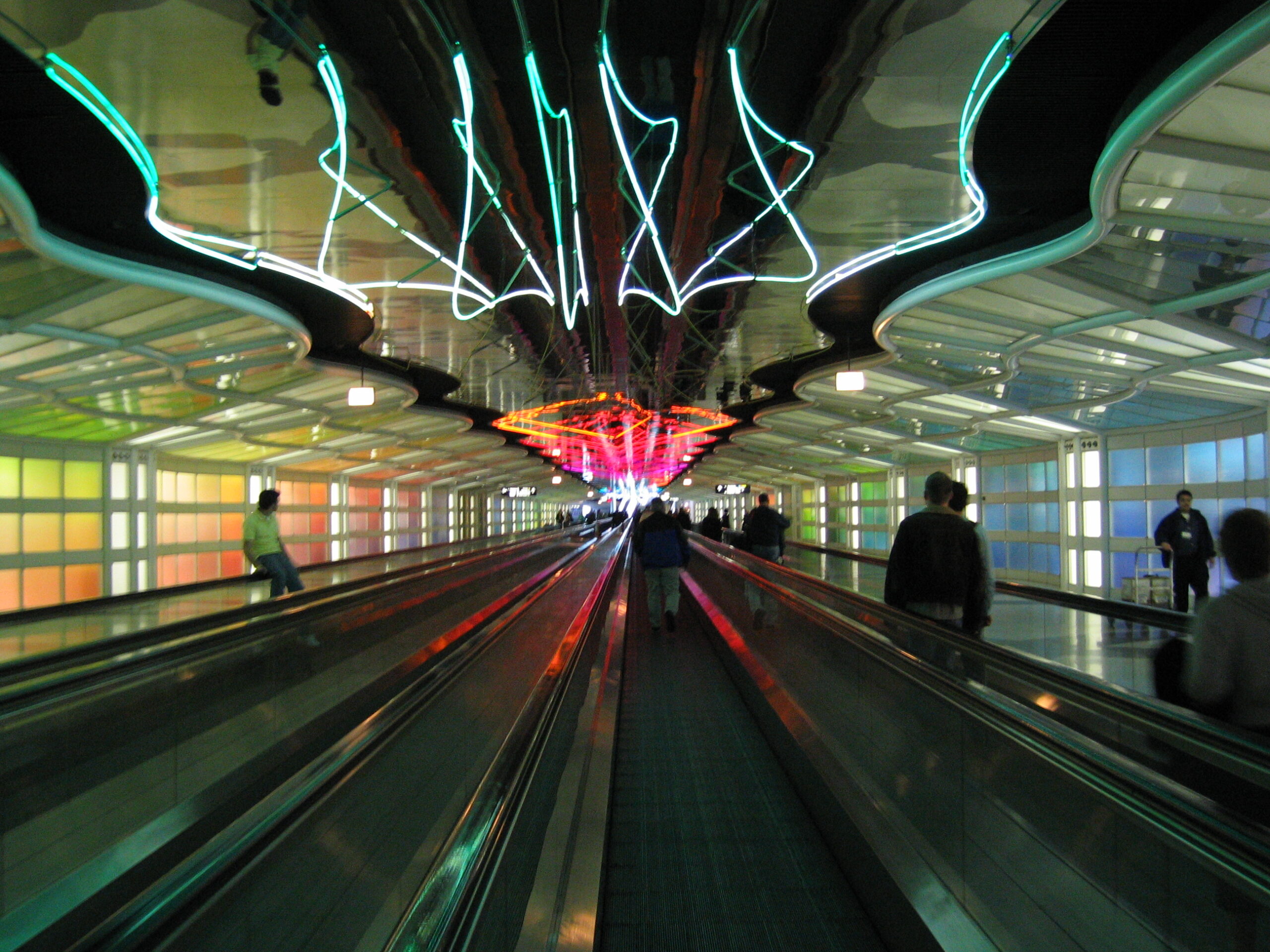
Moving walkways, or “people movers” as they’re sometimes called, can be found in most major American airports. And, at least in theory, they serve a pretty important function—moving a bunch of very rushed people, very short distances, a little quicker than they can on their own two feet.
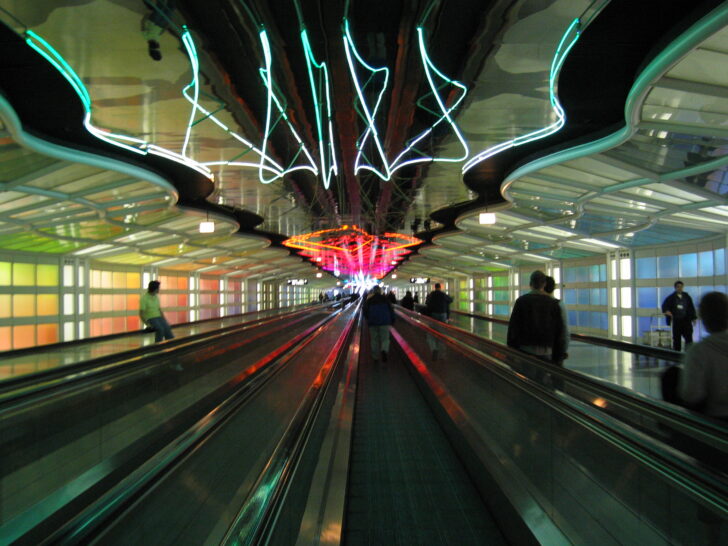
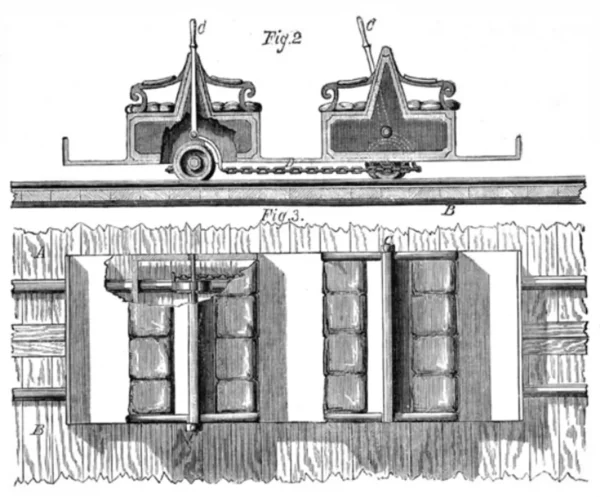
The moving walkway is completely associated with air travel, but it turns out it was not invented to get you to your plane on time. In fact it was originally seen as a form of mass transportation. Over the course of a century, a group of architects and engineers dreamed of turning the sidewalk into a magic carpet that could carry people all throughout the city.



Comments (9)
Share
I am just returned from the Grand Egyptian Museum in Cairo. The have incorporated a sloped moving walkway adjacent to the Grand Stair that affords lovely changing views of the sculptures displayed there.
SF author Larry Niven had it right years ago – these are “slidewalks.” I just enjoyed a visit to Vigo, Spain, where a series of end-to-end covered slidewalks carry people up a steep hill on the Gran Via.
If you’re ever in Sydney, Australia, check out our moving walkway – possibly the longest in the world according to Guiness. It’s rarely if ever operational these days, but still fun.
https://www.youtube.com/watch?v=R6L76B6qvwM
This is a brilliant episode! But no mention of the Travelator, formerly installed in Paris’s Montparnasse metro station? It was fantastic — so fast that it had unique acceleration/deceleration zones on either end. If you stood still (as instructed!), it worked as advertised. But people don’t like to follow directions, and would try to walk normally, which caused them to slip and fall. A lot. It was great fun, though.
https://www.guinnessworldrecords.com/world-records/83543-fastest-moving-walkway
H.G. Wells’ excellent novel “When the Sleeper Wakes” is set in a future London circa 2100, which features a whole network of moving sidewalks called “moving ways”, where people could choose between various bands moving at different speeds, depending on how fast they wanted to go.
Isaac Asimov had the moving sidewalk n one of his Robot novels.
Thank you for this episode on moving sidewalks…. I want to add that Toronto had an amazing 137 metre-long moving sidewalk integrated into one of the Toronto Transit Commission’s subway stations. There are several articles online which do the walkway far more justice than I ever could. Moving Walkways weren’t just in American Airports!
You may have missed one of the biggest reasons walkways are disappearing. Long ago luggage did not have wheels and you were happy to be on a walkway and put your bags down.
Now everything has wheels and you don’t need that resting spot while walking.
Great show.
London also has a few, to shorten transfers in sprawling train and transit stations. Waterloo (to better connect Jubilee line to the main train concourse and other underground lines) and Bank (connecting two stations with diverse underground lines together)