
Stories about biomimicry can be catnip for design journalists. They’re catchy, and there’s something seductive about a designer borrowing from a legacy solution in nature to solve a human problem. It makes for a simple and compelling narrative. Japan’s Shinkansen is a classic example: the bullet trains were hitting tunnels so fast they punched the air out the far end, creating a boom loud enough to rattle windows in the neighborhoods along the track … until a birdwatching engineer named Eiji Nakatsu took inspiration from the kingfisher, which dives from air into water after fish with barely a splash, and gave the train a long, beak-shaped nose.
But some of the most richly interesting biomimicry stories are more complex, with messy causality, dead ends, or undeserved hype. The following three examples run from relatively straightforward to surprisingly inverted and dazzlingly complicated. Headline grabbers can be fun, but deeper dives are often the most rewarding ones.
Shipworms and the Thames Tunnel
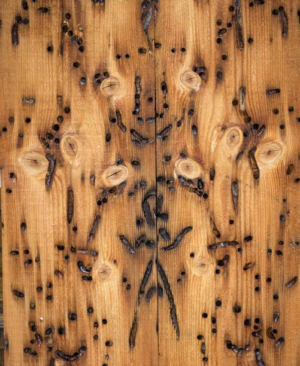 In the early 1800s, London was already the largest city in the world, with the largest port, and yet the only way across the Thames near it was the notoriously crowded London Bridge, a choke point for everyday traffic and commerce alike. A second bridge downstream would have interfered with shipping, so that was a non-starter. The only real alternative was to tunnel under the river, but there was no precedent for burrowing under a wide active waterway. Tunneling in that era using mining techniques, developed for solid rock and soil, not the soft, watery ground under a river – attempts to tunnel underneath the Thames had ended in collapse. One engineer, Marc Brunel, had written the whole thing off as impossible, until he came upon the work of a navy shipworm.
In a naval dockyard, Brunel found and examined a piece of condemned ship’s timber that the shipworm, Teredo navalis, had bored full of holes, and under his magnifying glass he noticed the walls of those little tunnels stayed smooth and stable even in waterlogged, rotting wood. The shipworm that created these isn’t actually a worm but a bivalve, a strange cousin of the clam whose shell has evolved into a pair of grinding plates. And to create its stable passageways, it does two things at once: as it scrapes the wood in front of it and moves forward, it extrudes a lining that coats and reinforces the tunnel behind it, so there’s never a gap.
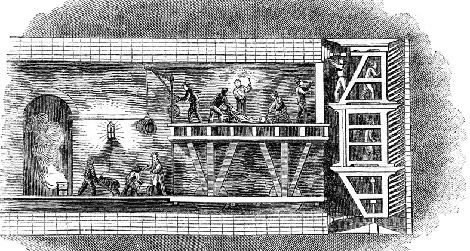
In 1818 Brunel patented a system that would work the same way, digging and reinforcing at the same time. He called the key piece of it a “tunneling shield” — a cast-iron frame that protected dozens of miners chipping at the face, while bricklayers walled up each exposed section right behind them, just like a shipworm. It worked, albeit with dramatic setbacks. At one point, the Thames broke through and drowned six workers, and Brunel’s own son barely made it out alive. But the tunnel was eventually finished in 1843, the first of its kind. It’s still in service today, part of the London Overground rail network.
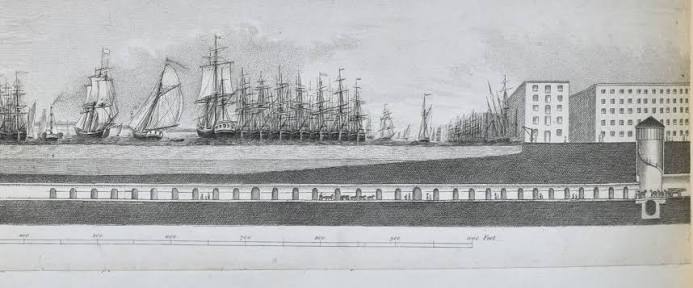
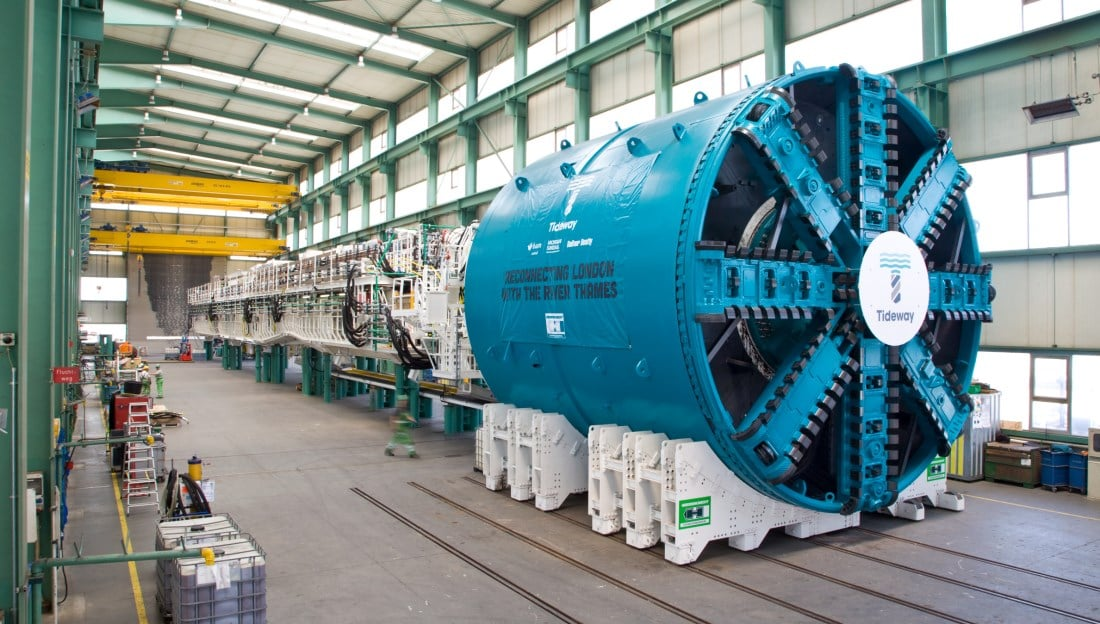
And for its part: Brunel’s shield became the foundation of modern tunneling, with similar tunneling shields used to build the subways of London and New York. Some modern machines have converged even further on the mollusk, placing precast concrete tunnel sections as the system bores onward in a smooth and contiguous process.
Boxfish and the Bionic Car
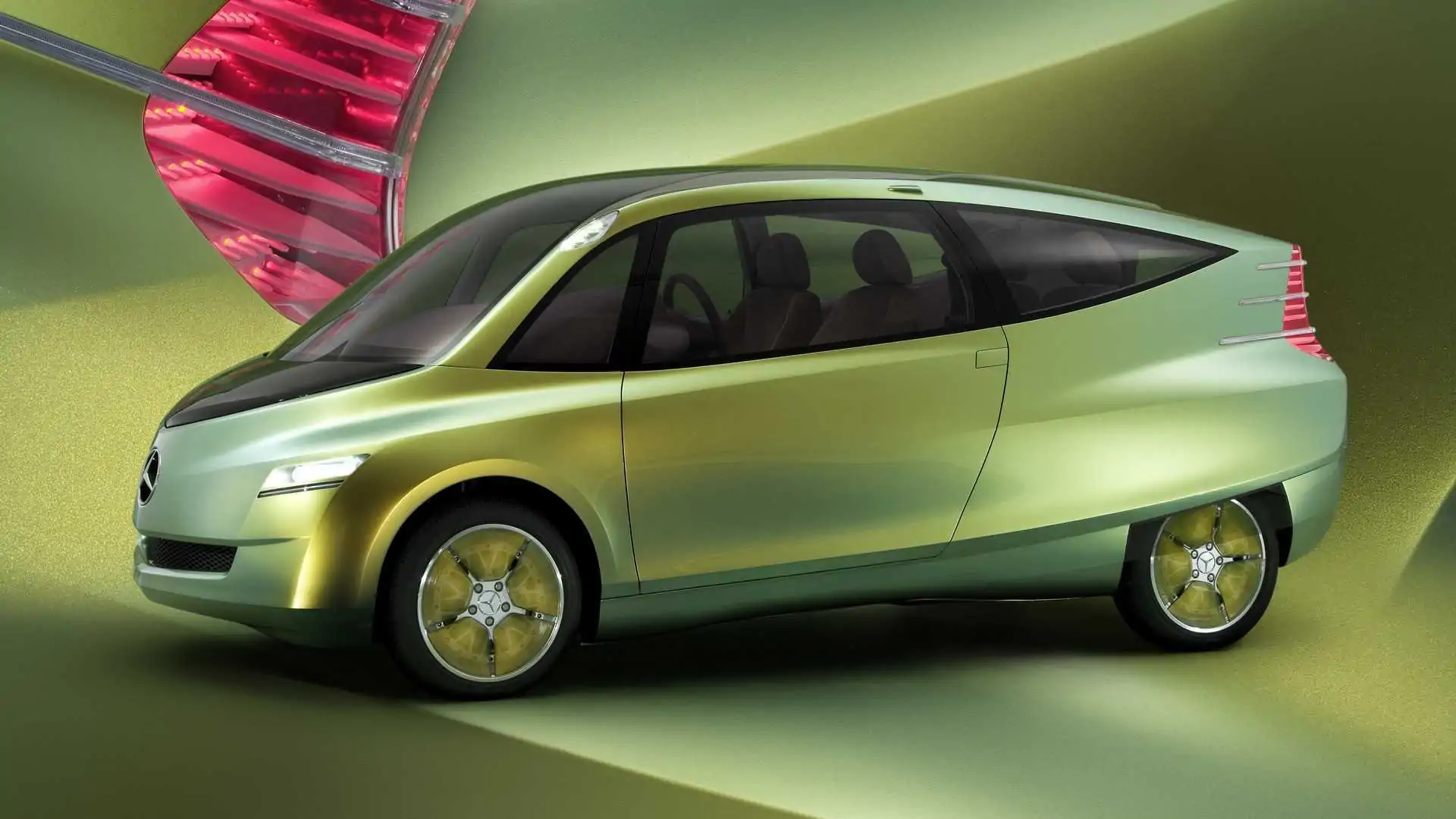
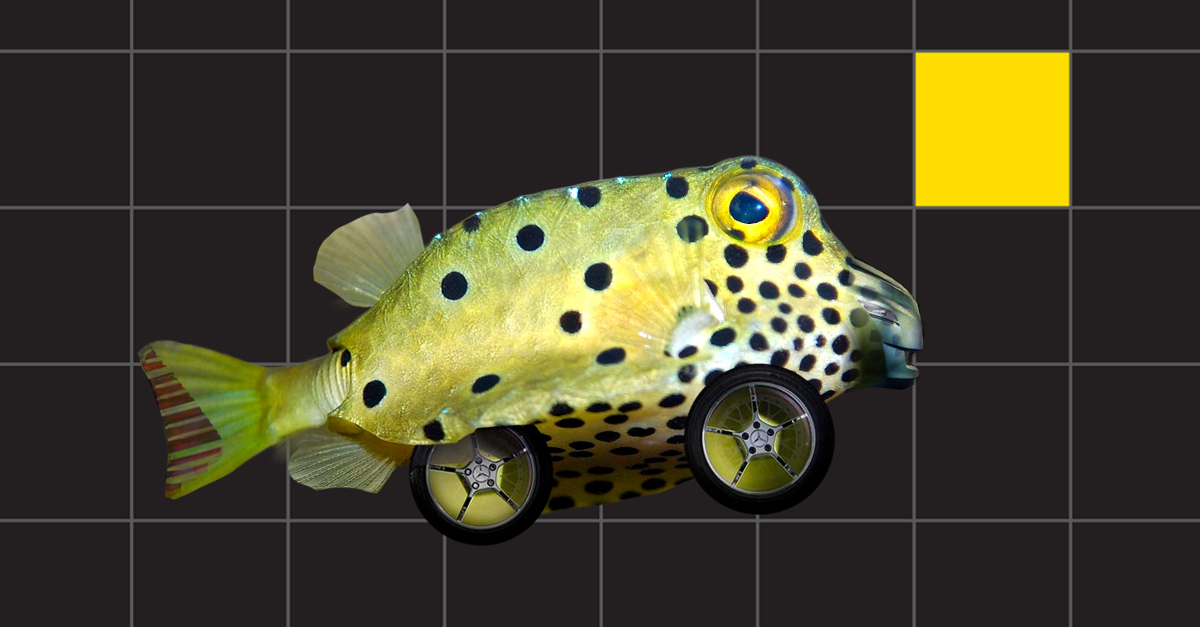
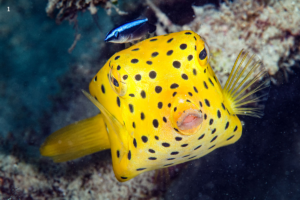 In 2005, Mercedes-Benz made a big splash with the Bionic, a concept car with a biomimetic origin story. The company claimed a first-of-its-kind approach, borrowing not just one element from nature (like a bird feather or whale fin) but an entire model organism: the boxfish. This fish is basically a floating cube with fins, which is boxy (like a car) and yet not something one would imagine as a prototype for a new sleek ride. Yet according to researchers at UCLA and Caltech, ridges along the boxfish called keels create little eddies that help it course-correct, aiding stability. And Mercedes ran its own drag tests, concluding the fish was an “aerodynamic ideal.” The resulting Bionic got featured in National Geographic and installed at MoMA, and for a while it was the most widely circulated example of automotive biomimicry in the world.
And the story would end there, except for new research done a decade later, turning the original findings upside down. Newer research using more sophisticated 3D modeling showed that the blunt, boxy front plowing head-on through the water does fine going straight, but the moment the fish turns its head, everything destabilizes and forces shove further aside. The boxfish is not an aerodynamic ideal – quite the opposite: it is unbalanced by default. And that makes sense if you look at where and how the fish lives. Boxfish aren’t racers. They thread through reefs and evade predators, and they need to turn on a dime, flicking their fins and rotating in three dimensions, which is the opposite of what you want in a streamlined and stable vehicle. The original researchers, to be clear, weren’t wrong: there are elements that help stabilize the boxfish – but they exist to counteract its natural instability.
As for Mercedes: they never updated their story. The Bionic’s official webpage still calls the boxfish highly streamlined, despite the evidence that derails that idea. Then again, it was never really about whether the car worked – it was always a concept vehicle, made to showcase various green innovations, garner public attention, and then sit forever on the shelf.
Honeycombs and Hexagons
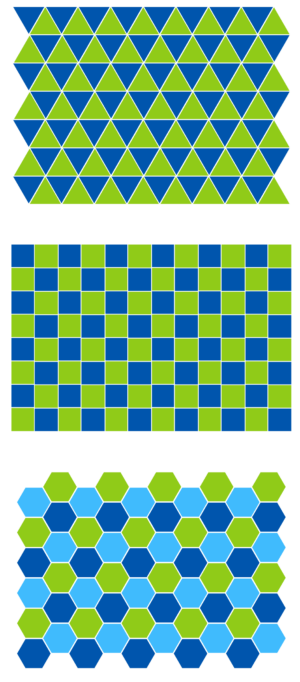
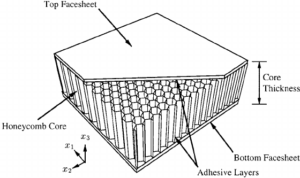 Peel back a panel on a Boeing plane or a NASA shuttle and you’ll see an array of hexagons, called honeycomb sandwich panels for obvious reasons: they will instantly remind you of a beehive. People have admired honeycomb since ancient times, and geometers worked out long ago that hexagons are one of only three shapes (along with squares and triangles) that tile continuously without gaps. They’re also the one that gives you the most area per unit of edge, so you can build with the least material. Bees benefit from that efficiency, and so do humans. For the most part, no one really thought much beyond those basic material facts.
But in the 1800s another contingent saw the honeycomb as evidence of divine design; one clergyman-naturalist called bees “heaven-instructed mathematicians.” Darwin took the argument seriously as a threat while he was writing On the Origin of Species. If evolution is incremental, how do bees arrive at a perfect geometry? A slightly-off hexagon isn’t a step toward a good one; it’s just a bad shape. So, theological naturalists asked, where are the in-between versions?
Darwin was so concerned about this critique that he kept bees for research even as he worked on his opus, and what he found is that they don’t build hexagons outright. They dig roundish, basically bee-shaped holes; it’s just that when a bunch of them dig side by side, they bump into their neighbors and naturally flatten shared edges into hexagons. It’s not something built from an architectural plan – just the organic outcome of how they excavate.
He folded that into Origin as evidence for evolution, reinforcing the link between honeybees and hexagons in one of the most popular books of that era. And so, naturally, hexagonal designs a century later got dubbed honeycomb panels. After 2,000 years of back and forth amongst geometers, scholars, theologians, biologists, it’s hard to say whether the idea of using this shape traces to bees or humans – or most likely: an interplay of both. It’s just not a straight line.
Full Circle Hexagon
There is, however, a more recent development that is a bit more straightforward, at least in isolation. For over a century, aerospace engineers have worked with a platonic ideal of honeycomb geometry: an equilateral six-sided polygon. But in the late 2010s, the additive manufacturing researcher Dhruv Bhate began questioning that abstracted model. Bhate had spent years 3D-printing honeycomb structures for industrial clients, and recognized that his methods could reproduce geometries traditional fabrication had necessarily simplified. So he sought out an entomologist at Arizona State University’s Biomimicry Center.
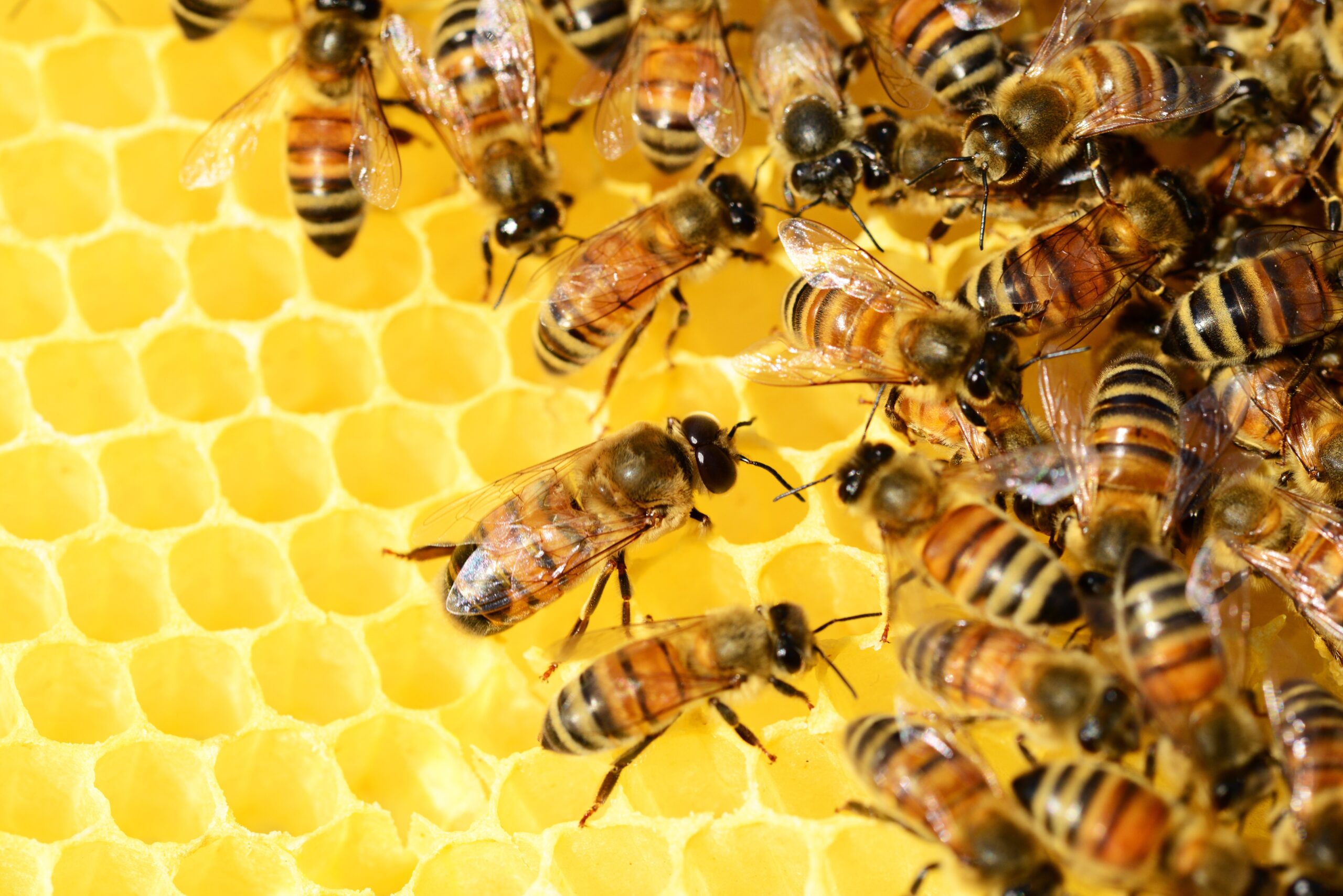
Comparing manufactured panels to actual bee comb, the pair saw visible differences at a glance: industrial hexagons have sharp corners while bee cells have rounded ones. With NASA funding, they looked closer, X-raying and characterizing combs from dozens of species of bees and wasps, cataloging variations in wall thickness, corner geometry, and the way separate comb sections are joined together. They 3D-printed cores incorporating these features and tested them against conventional designs. In a discovery unlikely to surprise Darwin, subtler elements of the comb’s shape improved structural performance, bringing the science full hexagon (and beyond).
In isolation, this last little story has the makings of a straightforward biomimicry tale – but looked at more broadly, honeycombs and hexagons illustrated the richly complicated interplay of animal engineering, human science, and interspecies design.


Leave a Comment
Share