
Neil Young is one of the most decorated and popular musicians of the 20th century. But he’s much more than a legend of classic rock. In fact, he’s taken some pretty big swings throughout his storied career. He’s filled an entire California ranch house with model trains. He’s made an experimental electronic music album that baffled his fans. He even directed a baffling sci-fi film starring the band Devo.
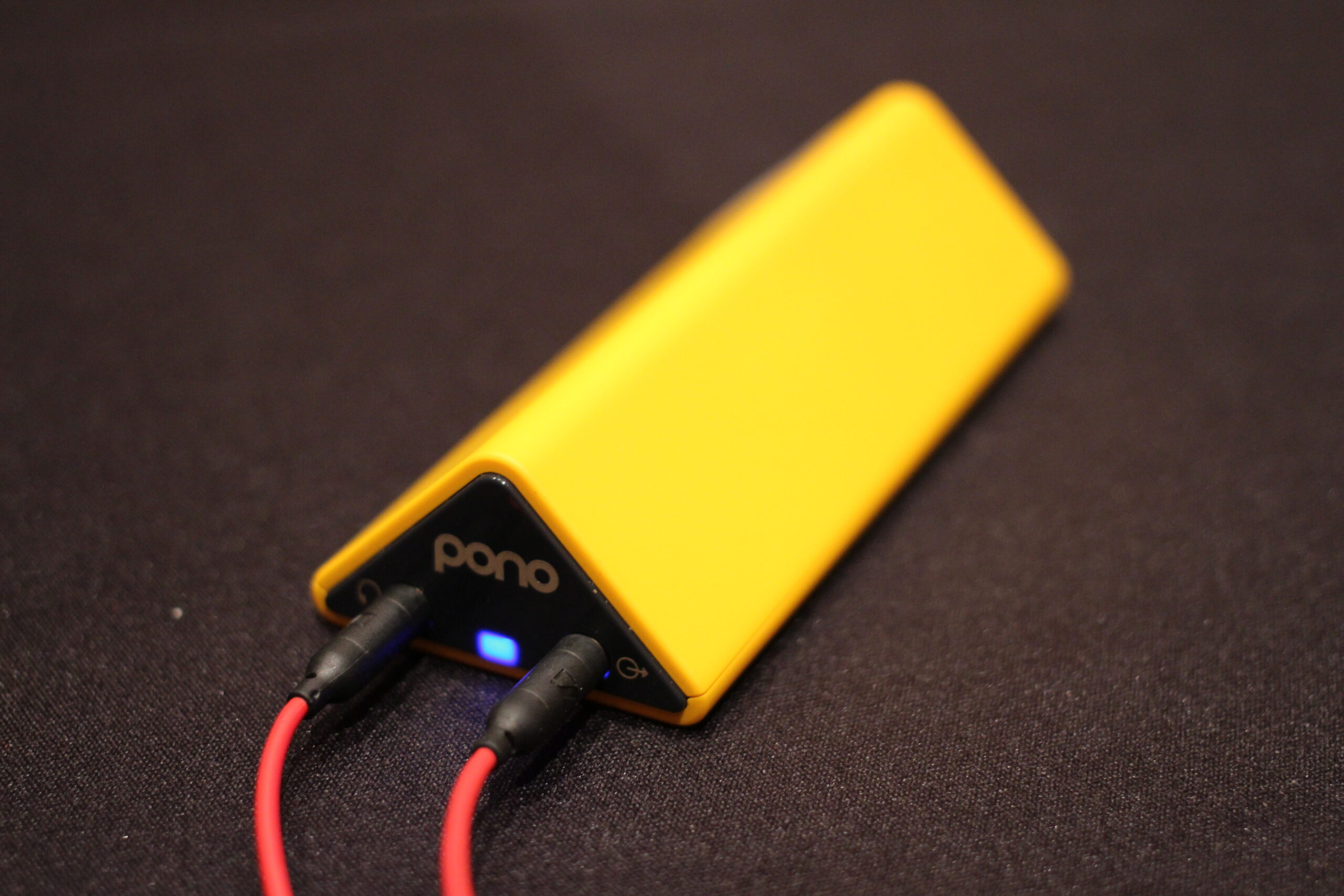
But perhaps his most radical experiment was his attempt to build a music player that would rival the iPod. Young’s device, called Pono after the Hawaiian word for “righteous”, rolled out in 2015. It took the form of a yellow equilateral triangle, and was marketed as a way to listen to higher quality audio files, and experience a richer sound quality than what was available from tech giants like Apple.
Young recruited celebrity pals like Tom Petty and Elton John to hype up his new music player, and promised that listeners would fall in love with higher resolution audio. But ultimately, it never found an audience. Critics were very mixed on the Pono, with some arguing the listening experience was no better than the cheaper audio players already on the market.
After a few short years, Young stopped producing Ponos, and the curio was largely forgotten, or remembered only as a punchline. But for the device’s tenth anniversary, writer Nate Rogers has made a reappraisal, provocatively titled “What if we were Wrong About Pono?” In it, he argues Neil Young and his cohorts were ahead of their time, and that the yellow triangular bauble looks a whole lot better after a decade of devaluing music and the people who make it. Perhaps the Pono is a noble project, one we just weren’t ready for.
Phil Baker and Neil Young wrote a book about their experience with the Pono in 2019, called To Feel the Music.


Comments (2)
Share
Great episode!
But a bit disappointed that you didn’t mention the terms “hi-res audio” and “lossless audio” as ways to distinguish the kind of quality Young was pursuing.
Also, the Pono lives on … several companies like Astell&Kern and Fiio make hi-res players that let you enjoy these audio files whether you save them to the device or stream them via wifi.
Young was clearly onto something. Just ahead of his time.
Only once or twice did you approach the point that “MP3” is a format and doesn’t convey the wide range of compression available. Yes, the default from iTunes was pretty horrible. But one can do a better job of compressing into the MP3 format (with variable bit rate) and still get moderately good storage and quite good sound. Is it as good as lossless? No. Am I listening in an ideal soundstage? Also no.