
The Hidden Levels Original Soundtrack is now available everywhere!
Nature in video games has evolved from a simple backdrop to an essential portal for many, particularly those whose access to the outdoors is limited.
Consider Cassie Anne, also known as Snifferish, a prominent Minecraft influencer. Due to severe, unexplained allergies to the sun and grass Cassie was forced to retreat indoors, finding solace in the blocky, endless terrain of the game. Minecraft became an escape, facilitating the exploration of diverse biomes and building a profound sense of connection to nature. In their way, virtual worlds can provide a meaningful experience of the natural world.

The ability of games to create this kind of connection is the product of decades of technological advancement, shifting from the simple, gridded 2D backgrounds of early titles like The Legend of Zelda to today’s hyper-detailed “open world” games. These immersive environments, like the dynamic ecosystems found in Breath of the Wild, are made possible by two key innovations. The first is procedural generation, where rules are fed to a computer to algorithmically create seemingly infinite, non-repeating landscapes, giving games like Minecraft their unparalleled scale. The second is the relentless pursuit of photorealism. Professionals use high-tech scanning to capture real-world objects and feed them into powerful game engines that simulate light and physics with breathtaking fidelity.
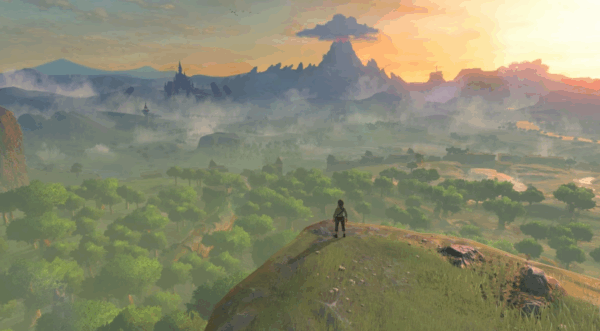
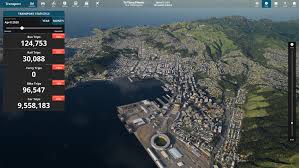
It’s clear nature has a profound influence on games. But it’s also true that the very technology perfected to create virtual entertainment is now being used to solve real-world problems. The same game engines and procedural generation techniques are employed to create immersive 3D simulations of real cities or coastlines (known as “digital twins”), which are in turn used to visualize the impact of sea level rise, plan for a world of increasing wildfires, and aid in urban development. This utility demonstrates the powerful real-world applications of virtual design.
However, this virtual realism comes at a significant cost to the living, breathing world. Researchers estimate that the immense energy consumption required to develop and play visually demanding games contributes around 50 million tons of CO2 annually.
Still, despite this immense environmental footprint, the games themselves are improving ecological awareness; they are capable of teaching players about sustainability (e.g., resource management in Minecraft) and dramatically boosting public interest in wildlife.

At its best, video game nature serves a dual purpose: offering a vital connection for those unable to “touch grass,” while improving the real-world tools for protecting the planet. The digital nature experience may not be an exact replacement, but it can foster a level of engagement and care that translates back into the world beyond the screen.



Leave a Comment
Share