
Everyone grows up learning the same story about the RMS Titanic, that when the ship set out on its maiden voyage in 1912, the owners and authorities, confident that the ship was unsinkable, did not require it to carry a full complement of lifeboats. So when the Titanic sank in the frigid waters of the North Atlantic, more than half of the people on board died for lack of lifeboat space. But the more you learn about the history of lifeboats and how they worked, the more you realize that the standard story about the Titanic’s lifeboats isn’t entirely correct.
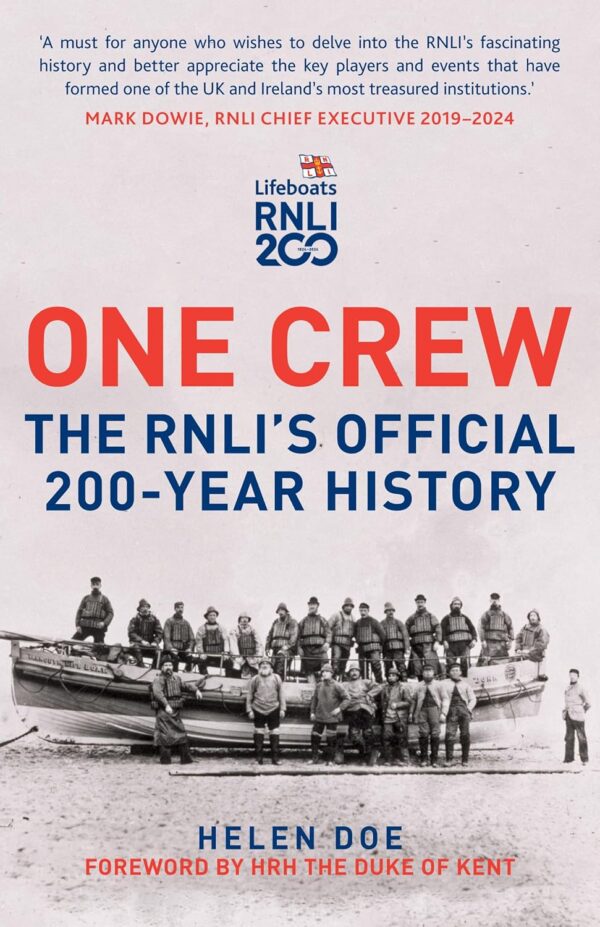
Helen Doe is a maritime historian and author of the book One Crew, a history of the first ever nation-wide lifeboat service, Britain’s Royal National Lifeboat Institution. Doe says that for most of human history, the onboard lifeboat you are likely picturing in your head right now did not exist. Even as late as the 18th century, on a typical wooden sailing ship, what few boats were on board were mostly for taking cargo and crew to and from shore. There were no boats designed for the crew to get on just in case the ship sank. So if your ship did sink, there wasn’t much you could do except signal for help, by firing a cannon or lighting a fire, and hope that someone came to your rescue.
Then, in 1785, a British carriage-builder named Lionel Lukin filed a patent for an “unimmergable boat”, the first known craft designed with the specific purpose of saving lives at sea.
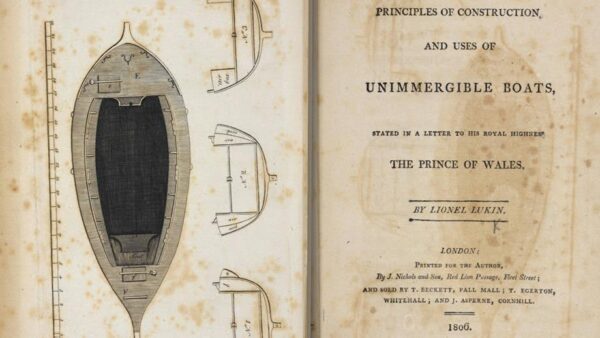
Lukin’s key innovation was to line the boat’s hull with sealed air pockets and cork to help keep it buoyant, even in the most difficult conditions. Less than a decade later, the Englishmen William Woudhave and Henry Greathead improved on Lukin’s design. Their boat’s hull rose steeply upward at both ends, so that only the middle of the boat would ever take on water, while the bow and stern stayed above the waterline, making it even more difficult to sink.
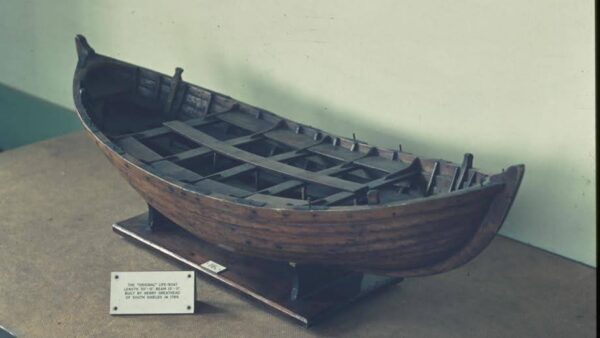
The boat was also intended to be “self-righting”, so it wouldn’t capsize. And somewhere along the way, these unimmergable, self-righting, life-saving vessels were finally dubbed “lifeboats.”
The earliest lifeboats were meant to be launched by people on shore, not unlike coast guard rescue boats today. Lifeboats slowly made their way onto ships with the advent of the transatlantic passenger steamer in the mid-19th century.
But sailors soon discovered that, although lifeboats launched from shore performed well, lifeboats on ships were rarely able to save anyone. Mike Brady is a maritime history researcher and the creator of the youtube channel Oceanliner Designs. Brady says lifeboats on ships were only useful when the water was calm and you were sinking slowly and close to land. The rest of the time, lifeboats were a gamble.
Shipboard lifeboats were more ungainly and cheaply built than their shore-based counterparts. They were designed to carry as many passengers as possible, not a rescue crew, and it was difficult to get passengers onto a boat from a moving deck, and then lower that boat into a raging storm.
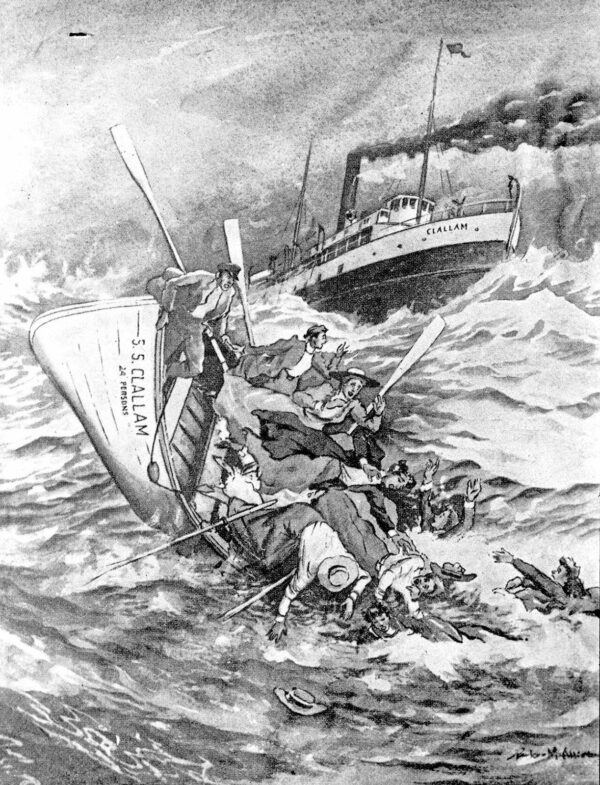
And even if a lifeboat got safely away and was piloted by a trained crew member, that would do very little good if the ship sank far out at sea, without hope of rescue. As a result, many lifeboats simply disappeared, or were found decades later washed up with their complement dead inside.
But at the turn of the 20th century, the shipping industry hit upon a better strategy – summed up by the mantra “the ship is its own best lifeboat”. The idea was to make ships so sturdy, with so many safety features and redundancies, that there would rarely be any need to get in an actual lifeboat. Instead, in most emergencies, the safest boat would be the ship itself.
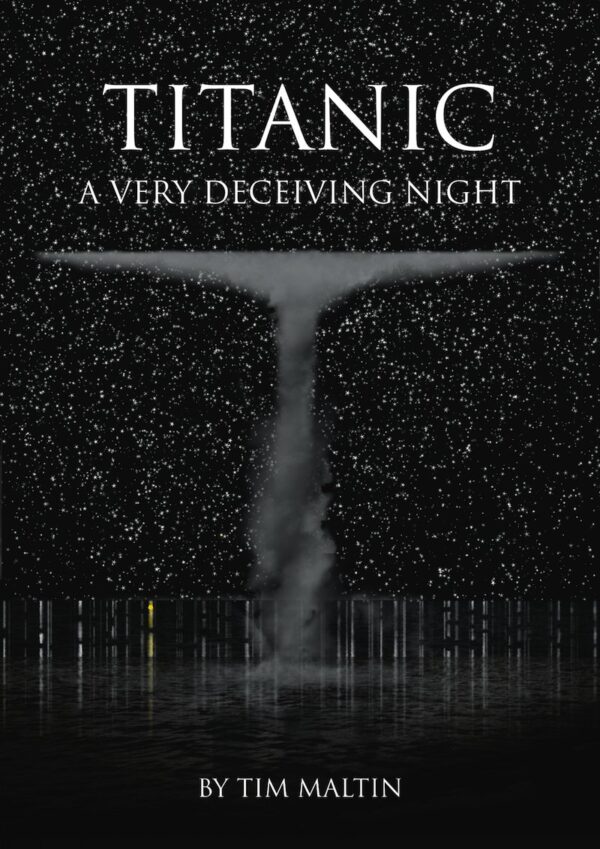
Tim Maltin, a historian, television presenter, and author of the book Titanic: A Very Deceiving Night, says these new ships could handle collisions much better than their predecessors. They were constructed with stronger, plated steel and with crucial redundancies, such as double-bottomed hulls. A hull would also have multiple compartments sealed with watertight bulkheads, so that any flooding from a breach could be contained to a small area, and the ship could stay afloat.
Ships were also getting bigger, which made them stabler in rough seas. And if your ship did sink, it was now supposed to sink slowly, over the course of several hours, instead of a few minutes. And thanks to the introduction of the Marconi wireless telegraph, if your ship was in trouble, a radio message could then be sent out and picked up by nearby vessels in your ship’s sealane, who would then come to the rescue.
Meanwhile the design of shipboard lifeboats changed very little. Instead, they took on a far humbler and, frankly, more achievable role: lifeboats were to be used only to ferry people from a damaged ship to a rescue vessel. So designers never saw any need for a full complement of lifeboats. Between any two ships there’d be enough, with plenty of time for them to make multiple trips between vessels. The idea of providing simultaneous lifeboat space for everyone was never taken seriously … until the night in April 1912 when the Titanic sank.
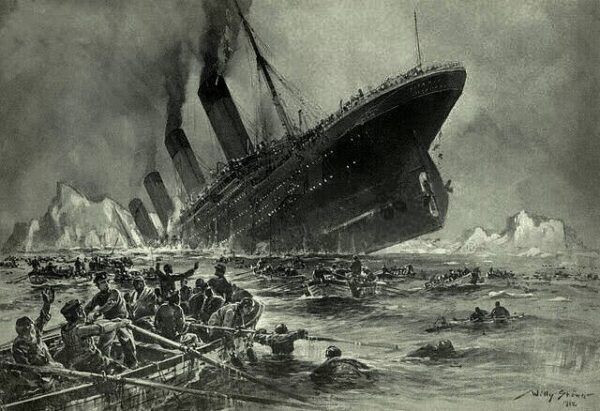
But the truth is the Titanic and its lifeboats faced a freakishly rare set of conditions. The Titanic arguably was the safest ship in the world, but the iceberg hit it in just the right way to cut through its many safety redundancies. Even worse, the one ship close enough to stage a rescue turned off its radio for the night just before Titanic sent out its distress signal. Meanwhile, the unusually calm seas made Titanic’s lifeboats look safer and more reliable than they actually were. Had the weather been any worse, many of the small, open-topped, overcrowded boats would have been swamped. And, in the end, more lifeboats would not have made much of a difference. The Titanic sank slowly, as she was designed to, but even so, the crew didn’t have enough time to launch all the boats. Even with a full complement of lifeboats, at best, they would have only been able to save a handful more people.
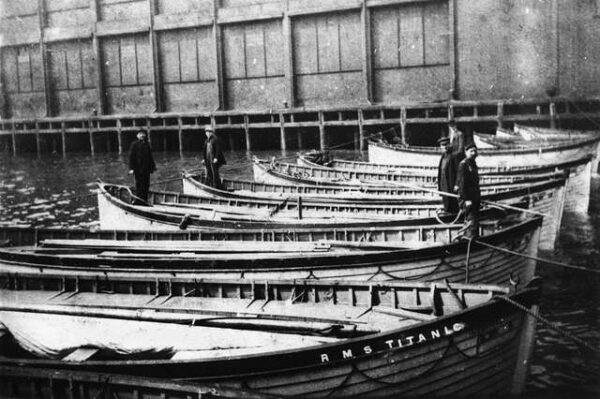
But when the survivors were picked up the next morning, none of this mattered. In the immediate wake of the disaster, the stark math of who survived and who didn’t provided the Titanic story with a simple moral. Lifeboats meant life. From now on, in the public imagination, it was critical that a ship have enough lifeboats for every person onboard.
In 1914, just two years after the Titanic disaster, an international treaty made the practice of lifeboats for all mandatory. That treaty – called SOLAS for Safety of Life at Sea – has been signed by 168 countries and is still in effect today. Luckily, lifeboat technology has caught up with our expectations. They are still only to be used as a last resort. Even now, the ship remains its own best lifeboat. But modern lifeboats can be launched faster and are far safer on the water than their 20th century predecessors. And on very rare occasions, having enough lifeboat space for everyone has actually proven crucial. So, even if it’s not the lesson we should have learned from the Titanic, in the final analysis, it turns out everyone really does deserve a spot.




Comments (1)
Share
Please make an ep. About the RNLI.